1000 vs 2000 Grit: Which Starting Stone Is Better for Hard Japanese Steel?
You've got a Hitachi White #1 blade sitting at 65 HRC. Gorgeous. Terrifying to sharpen. You walk up to your stone station and freeze. 1000? 2000? Which one gets the job done without wasting an hour of your life? Here's the thing. Most advice online treats all steel the same. But hard Japanese steel doesn't play by those rules. The scratch pattern matters. Speed matters. And starting wrong means fighting your stone instead of working with it.
1000 Grit Cuts Fast. Maybe Too Fast.
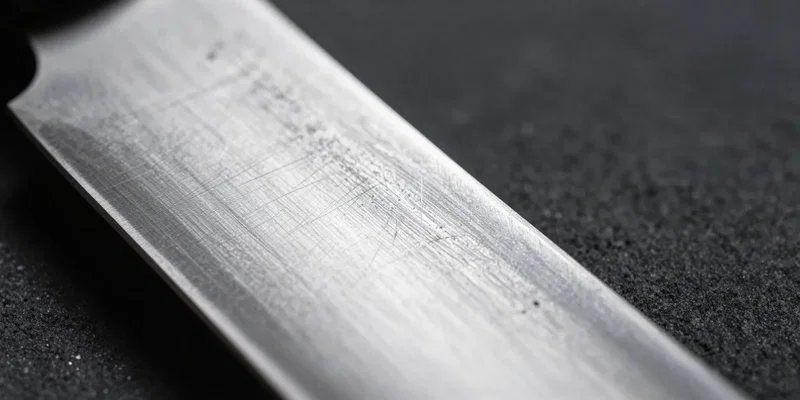
A 1000 grit stone is a beast. It removes metal quickly. It'll eat through a chipped edge or a completely dull bevel without breaking a sweat. But on hard Japanese steel, that aggression comes at a cost. You're carving deep scratches into a blade that holds an edge precisely because it's packed tight with carbides. Those deep furrows don't just disappear when you jump to your finishing stone. They linger. And they can leave your edge feeling toothier than you want right out of the gate.
2000 Grit Is Gentler. But Patience Is Required.
Flip the script. A 2000 grit splash-and-go feels silky under a Blue Super blade. The scratches are tighter. Cleaner. You could almost jump straight to a 5000 and call it a day. Almost. The problem? If your edge has any real damage, or if you need to reset the bevel, 2000 grit moves at a glacial pace on 62+ HRC steel. You'll be there until your hands cramp. It's not weak. It's just polite. And sometimes politeness won't get the job done.
Hard Steel Eats Stones. Literally.
At 60+ Rockwell, your steel is harder than the binder in many soaking stones. That means your 1000 grit Shapton Pro is shedding abrasive particles just to keep up. Hard steel flattens stones faster. It resists abrasion. So your grit choice isn't just about the finish. It's about efficiency. A 1000 grit on hard steel might behave like an 800. A 2000 might behave like a 1500. The numbers on the box lie. The stone just reacts to what you're pushing against it. Keep that in mind.
Start at 1000. Here's the Real Talk.
If you're maintaining a hard Japanese knife, start at 1000. Build a burr. Get the geometry right. Accept the scratches. They'll polish out in two jumps to 3000 and 6000. But if your edge is already in decent shape and you're just touching up? Skip straight to 2000. Save the aggression for when you actually need it. Hard steel rewards consistency, not brute force. Pick your battles.